Regina Is Hit by a Bus
Mean GirlsRegina Is Hit by a Bus interrupts the confrontation between Regina George and Cady Heron with a sudden accident, turning a struggle over social power into an immediate physical crisis. Regina has just insisted that fear still amounts to rule; a car horn and a gust of hot exhaust cut through her anger, and everything goes black. Cady’s later account confirms that Regina is hurt, not dead, while exposing how quickly rumor makes the accident into a story about Regina’s death or Cady’s supposed violence.
Causes and Immediate Circumstances
The collision follows the collapse of Regina and Cady’s alliance. Cady follows Regina outside, remorseful and calling after her, but Regina rejects the apology. Her mother is across the street waiting to pick her up, a conspicuous presence Regina resents: she notices the gold lamé motorcycle jacket and a top she compares to her grandmother’s drapes. The scene places the family pickup in the immediate setting of the confrontation, but does not establish whether Regina’s mother or anyone else sees the collision happen.
Cady calls out that she did not mean for events to turn out this way. Regina answers that discovering everybody hates her is not something she cares about, and makes the principle behind her response explicit: ruling through fear still counts as ruling. Her claim is less a sign that the social reversal has left her untouched than an attempt to preserve authority after its basis has been exposed. She is willing to accept hatred as the price of retaining control.
Regina then turns her anger on Cady, repeating the insult that Cady is a homeschooled jungle freak and a less-hot version of Regina. She accuses Cady of pretending innocence, rejects the apology as fake, and begins a further insult before the scene breaks off. The collision does not resolve the argument; it cuts into it. Regina’s last sustained action is an effort to regain the upper hand through humiliation, and the interruption makes the consequences suddenly physical.
The Collision
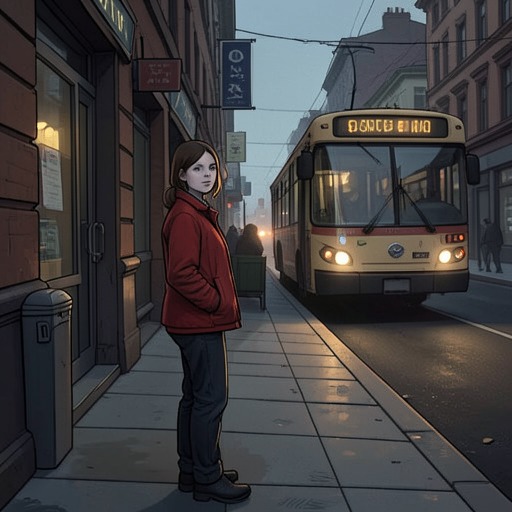
Before the impact is narrated, Regina thinks for a split second that she is having a rage stroke. The thought registers her anger as an overwhelming bodily crisis, but the next details shift the danger outside her: a car horn blares, followed by a gust of hot exhaust. Then everything goes black. The terse sequence replaces the verbal duel with sound, heat, and loss of consciousness, making the accident a sharp break in both the confrontation and Regina’s sense of control.
The account does not describe the vehicle’s approach, the precise mechanics of the impact, or the injuries Regina sustains. Its abruptness is part of the scene’s effect: instead of supplying a slow-motion account, the narration gives Regina’s last perception of a horn and exhaust and then cuts to darkness. The reader knows she has been struck, but the immediate physical facts remain limited to the blackout and the later confirmation that she is hurt.
Rumors and the Narrator’s Correction
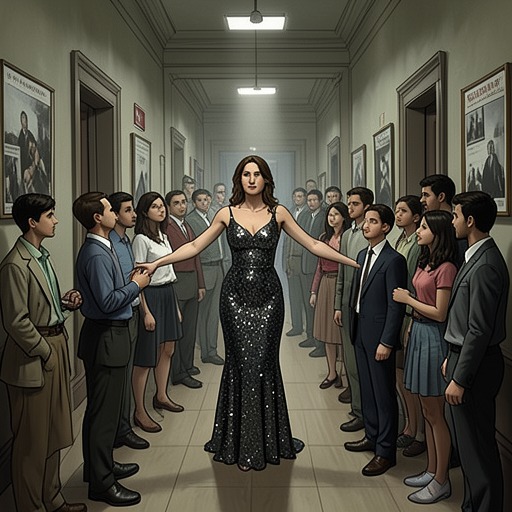
The first account after the blackout is not a stable report of what happened. A burst of messages imagines Regina as having been squashed by the bus, treats the accident as a possible death, and immediately recasts Cady as the school’s hottest girl. The exchange makes Regina’s social position seem transferable at once: her injury becomes an opening for competition and flirtation, even before the seriousness of what happened is clear. Gretchen proposes sending Regina something, while Karen suggests Starbucks; even concern is expressed through the girls’ familiar social shorthand.
Cady’s narration then sharply corrects the death story. She says that Regina did get hurt, but not that she died. Claims that Regina’s head went all the way around are rumors, as are claims that Cady pushed her in front of the bus. These corrections distinguish the established event from the embellishments circulating around it: an accident has taken place, Regina is injured, and the account does not substantiate either a grotesque injury or Cady’s deliberate intervention.
The way the story is told preserves that distinction. The brief, jokey declaration that Regina died is immediately withdrawn, and Cady identifies the more extreme claims as rumors rather than facts. The tonal switch makes the accident’s real consequence clear without pretending that its aftermath is fully known. It also keeps Cady’s own role in view: she denies pushing Regina, but the evidence here does not explain every rumor’s origin or establish which versions reach other students.
Aftermath and Significance
The collision changes the stakes of the scene in an instant. Regina had been defending a version of power in which fear was still enough; after the bus strikes her, control of the story passes to witnesses, message writers, and Cady’s retrospective narration. The social order responds to Regina’s apparent vulnerability by imagining who might replace her, while the corrections remind readers that the rumor of a death is not the event itself.
The accident also leaves a consequential gap between what happens and what people believe happened. The blackout withholds a full account of the impact, and the rumors fill that absence with death, bodily grotesquerie, and blame. Cady’s later corrections restore a narrower record but do not erase the uncertainty surrounding Regina’s injuries or every aspect of the collision. The scene’s decisive turn is therefore both physical and narrative: Regina is hurt and removed from the confrontation, while the versions of that event become another force shaping the social conflict.